Yale Lock Replacement: Cylinder or Complete Nightlatch?
Need to replace a Yale lock? On many traditional timber front doors, only the outside rim cylinder needs changing—not the entire nightlatch. This guide explains how to recognise the parts, what to check before buying a replacement and when a locksmith should inspect the door.
Change the part that's needed. Keep the hardware that's still working.
Send a photo of the outside keyhole and inside lock case, along with your postcode. Lock Luxe can discuss the next step and charges before a booking.
Based in Hendon NW4 • Local North & North West London • Confirm availability and total charges.Can You Replace Just the Yale Lock Barrel?
Often, yes. On a traditional Yale-style nightlatch, the outside key-operated part is called a rim cylinder. If the inside latch case works correctly and you simply need different keys—or the cylinder itself is faulty—a compatible replacement rim cylinder may be sufficient.
If the nightlatch body is failing, the latch will not retract or the lock is unsuitable for the door, replacing only the cylinder will not cure that problem. Yale also makes euro cylinders and other locks, so first establish which type you're dealing with.
Rim Cylinder, Nightlatch or Euro Cylinder?
“Yale lock” is often used as a general name for the nightlatch fitted to a wooden front door. But these different components are not interchangeable.
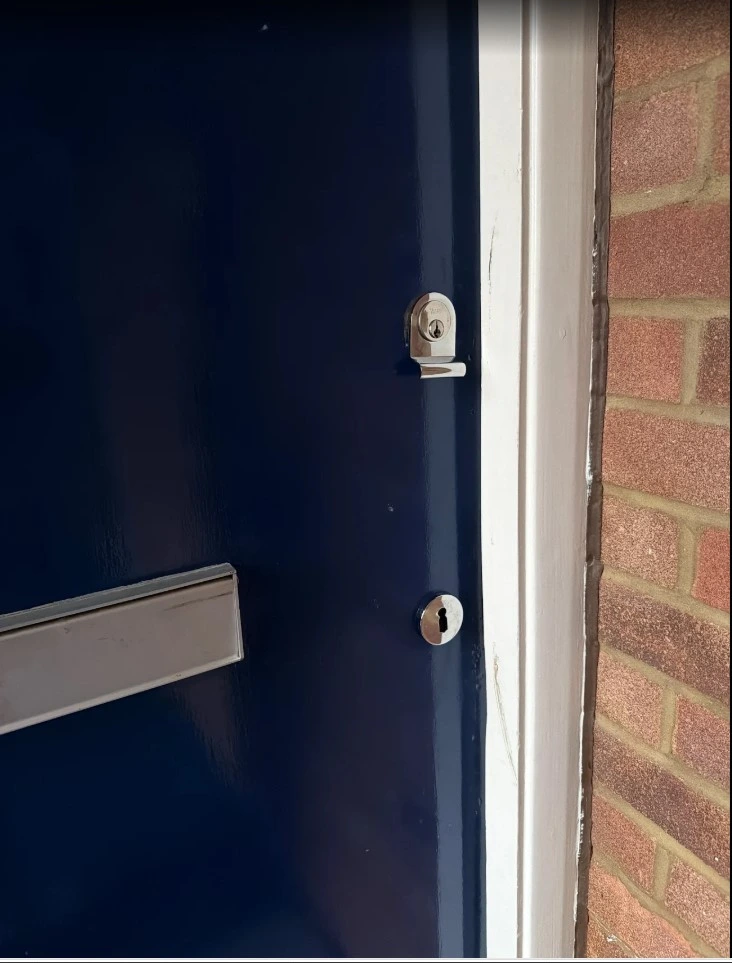
1. Rim cylinder
The keyhole on the outside of a nightlatch-operated door. A tail bar connects it to the inside case. Replacing this part can give you a new key set without automatically replacing a working latch.
2. Nightlatch body
The surface-mounted case on the inside face of the door. It contains the latch and inside handle or thumbturn. If the mechanism fails, the case or complete assembly needs assessment.
3. Euro cylinder
A different lock-cylinder profile, commonly used with multipoint systems on uPVC and composite doors. For these locks, see the euro cylinder guide.
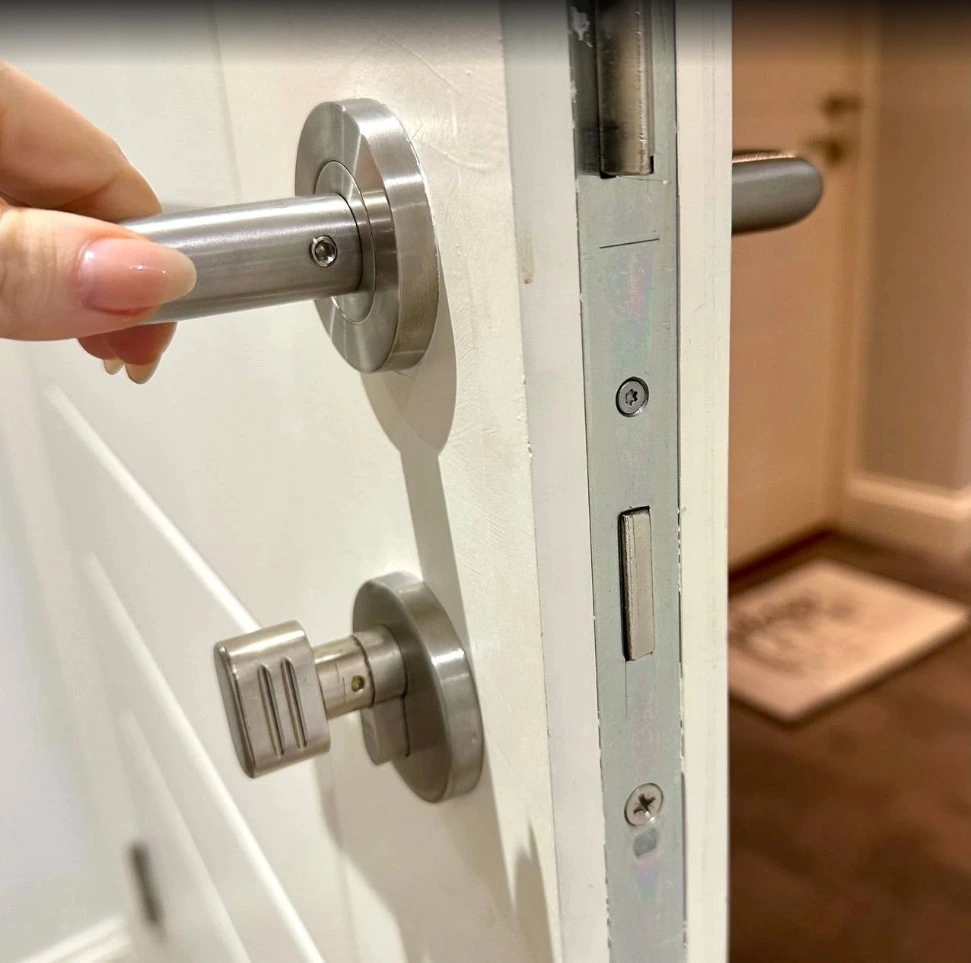
If your door also has a separate mortice deadlock, replacing the nightlatch cylinder does not automatically change that other key. See our front door lock types guide for a wider comparison.
How Do You Know What Needs Changing?
Use these symptoms as starting points, not proof of a particular fault. Door alignment, the keep and the cylinder-to-case connection can all affect operation.
| What happens | Possible explanation | What to consider |
|---|---|---|
| Lost keys, moved house or previous keyholders | The lock may work but key access is no longer controlled | Compatible rim-cylinder change if the existing latch remains suitable |
| Key sticks outside, but inside mechanism works | Key, cylinder, tail bar or alignment fault | Inspect the cylinder and fit before replacing the whole case |
| Latch fails to retract or spring into place | Nightlatch case or internal mechanism fault | Assess repair, case replacement or complete nightlatch |
| Door closes but doesn't latch reliably | Door/keep misalignment or a faulty latch | Inspect alignment and mechanism before buying parts |
| Lock damaged or unsuitable for the entrance | Wear, security or escape requirement | Choose a compatible complete replacement after assessing the door |
Important: Don't force a key, dismantle a spring-loaded nightlatch case or shut a door you may not be able to reopen. If it's your only safe exit, arrange professional help promptly.
How Do You Measure a Replacement Yale Nightlatch?
Different Yale nightlatches use different backsets, handle functions and fixing layouts. A similar appearance doesn't guarantee a direct fit. Yale identifies 40mm and 60mm backsets for several British Standard nightlatch models.
Viewed from outside, measure from the edge of the door to the centre of the outside cylinder/keyhole. This measurement is the nightlatch backset.
Look for markings and check whether the inside handle locks, releases without a key, or has another function. The correct model depends on security and exit requirements.
Door thickness, the cylinder's tail bar, existing holes, keep position, handing and finish can all matter. Confirm compatibility with the manufacturer's fitting instructions.
Communal entrances, flats, fire-rated doors and emergency escape routes can impose additional requirements. Do not substitute hardware solely because the size looks right.
Yale model example: its BS1/BS3 nightlatch variants use a 60mm backset, while BS2/BS4 use 40mm. The BS1/BS2 and BS3/BS4 models have different internal handle functions. Check the product specification before choosing one.
How a Yale Lock Replacement Is Approached
A rim-cylinder change is a different job from replacing a complete nightlatch. The correct method and any restrictions depend on the actual model and door.
Establish whether the issue is missing keys, an outside key fault, a failing latch case, the frame keep or the door's fit.
Check the lock model, backset, door thickness, operating function and any necessary British Standard or escape requirements.
Determine whether a suitable cylinder is enough or whether the complete nightlatch requires replacement. Confirm the proposed work before it starts.
After the manufacturer-specified fitting procedure, check key operation, inside release, latching and closing without force. A door that cannot lock and open reliably is not ready for normal use.
Not Sure Whether It's the Cylinder or the Latch?
Send Lock Luxe a photo of both sides of your lock and your postcode. You can discuss the likely next step before arranging attendance.
Do All Yale Nightlatches Meet British Standard?
No. “Yale” is a brand, not a certification. Yale sells standard nightlatches and higher-security models, including British Standard options. If an insurance policy mentions BS 3621, check whether the exact installed lock meets it rather than assuming all nightlatches qualify.
Security standard
Check the specification and markings of the particular model. A generic replacement cylinder cannot automatically turn a standard nightlatch into a BS 3621-certified lock.
Exit from inside
The internal handle function matters. Some Yale nightlatches are designed for keyless escape from inside; others have locking functions. Choose for the doorway's actual requirements.
Fire and shared doors
Do not change fire-rated or communal-entry hardware without checking building and fire-safety requirements. Lock and door suitability must be considered together.
Read the BS 3621 lock guide and the manufacturer's Yale lock-type guidance before choosing a security upgrade.
How Much Does Yale Lock Replacement Cost?
Replacing an outside rim cylinder and changing a complete Yale nightlatch require different parts and labour. Lock Luxe's published starting prices are useful context, but they are not a fixed Yale-nightlatch quote.
| Published service | Advertised amount | What to know |
|---|---|---|
| Standard cylinder lock change | From £99 | Starting rate for standard cylinder work; not guaranteed for any Yale rim cylinder |
| Attendance / call-out | £49 | Separately listed: confirm whether included or additional |
| Full Yale nightlatch | Quote required | Depends on the specific compatible model and fitting work |
| Out-of-hours / night work | From £149 | Confirm how this rate interacts with other charges |
Before authorising work, ask for the estimated total including applicable call-out, labour, lock parts, VAT and out-of-hours charges. A photo may help initially, but the door or lock may need to be inspected. See the full Lock Luxe locksmith prices.
Yale Lock Replacement in Hendon & Nearby North London
Lock Luxe is based in Hendon NW4 and focuses on nearby North and North West London locations, including Colindale, Golders Green, Finchley and Mill Hill. Send your postcode to confirm coverage, availability and charges.
Whether you've moved home, lost your keys or have a faulty nightlatch, the sensible starting point is to identify the affected component. For broader replacement work, visit Lock Replacement & Installation. For an existing faulty or jammed lock, see Lock Repair.
Yale Lock Replacement FAQs
Can I replace just the Yale lock barrel?
Often, if you mean the outside rim cylinder and the nightlatch body is in good working order. The replacement must be compatible with your specific lock and door thickness.
Can I change a Yale lock without replacing the complete nightlatch?
Yes, a compatible rim-cylinder replacement may be enough when the goal is new keys or the cylinder itself is faulty. A failing latch case requires a different repair or replacement.
How do I know if the Yale nightlatch is 40mm or 60mm?
Measure from the door edge to the centre of the outside cylinder/keyhole. Check the exact model and manufacturer's instructions before buying replacement parts.
Why won't my Yale lock catch when the door closes?
Possible causes include door/keep misalignment, a worn latch or an internal nightlatch fault. A cylinder change alone may not solve it.
Is a Yale rim cylinder the same as a euro cylinder?
No. A rim cylinder operates a surface-mounted nightlatch through a tail bar. A euro-profile cylinder fits a different type of lock system.
Are all Yale nightlatches BS 3621 approved?
No. Check the certification of the exact product. Also consider any building, fire-door and internal escape requirements.
How much does Lock Luxe charge to replace a Yale lock?
Lock Luxe lists standard-cylinder changes from £99 and a separate £49 attendance charge. A Yale rim cylinder or complete nightlatch needs a job-specific quote; confirm the total before booking.
Does Lock Luxe cover my address?
Lock Luxe is based in Hendon and focuses on nearby areas within roughly five miles. Send your postcode to confirm service coverage and attendance.
More Lock Guides & Services
Talk to Lock Luxe About Your Yale Lock
Tell us whether you need new keys, the outside cylinder is difficult to turn or the entire nightlatch is faulty. Include your postcode and clear photos, and ask for the total charges before arranging the job.